什么是JSON schema
JSON模式是一种声明性语言,用于注释和验证JSON文档的结构、约束和数据类型。它可以帮助您规范和定义对JSON数据的期望。
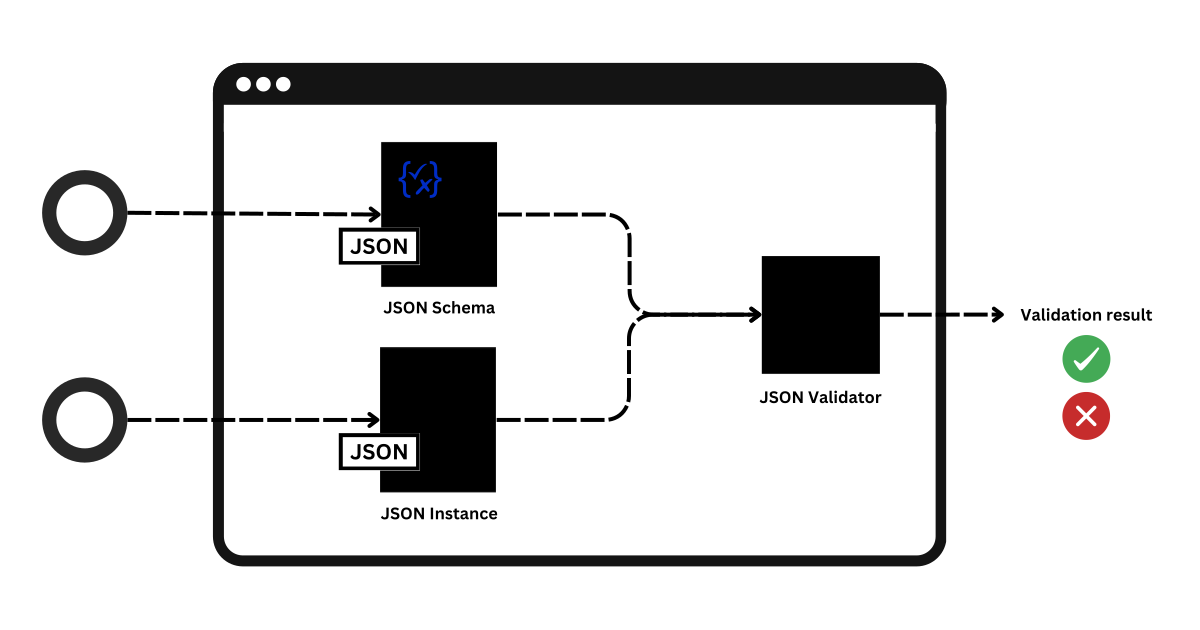
JSON schema/json有哪些不足
由于 JSON 模式不能包含任意代码,对于数据元素之间某些无法表达的关系存在一定的限制。因此,对于足够复杂的数据格式的任何“验证工具”,可能会有两个验证阶段:一个是模式(或结构)层面,另一个是语义层面。后者的检查可能需要使用更通用的编程语言来实现。
JSON schema 关键字
type
表示类型
$schema
表明使用的是哪版的JSON schema规范
$id
$id属性作为每个JSON schema唯一标识符,比如作为版本的概念
{ "$id": "http://yourdomain.com/schemas/myschema.json" }title和description
陈述模式(schema)的意图。这些关键字不会对正在验证的数据添加任何约束条件
properties
当您定义属性时,会创建一个对象,其中每个属性都表示正在验证的JSON数据中的一个键
exclusiveMinimum
用于指定一个数值必须严格大于某个最小值(即不包含边界值)Draft 6+ 版本:需配合 minimum 使用,且 exclusiveMinimum 为布尔值
required
将所需的验证关键字添加到模式末尾,即属性对象之后
{
  "properties": {
       ...
       "price": {
         "description": "The price of the product",
         "type": "number",
         "exclusiveMinimum": 0
       },
     },
  "required": [ "productId", "productName", "price" ]
}
items
定义数组中的内容
{
   "tags": {
       "description": "Tags for the product",
       "type": "array",
       "items": {
         "type": "string"
       }
     }
}
minItems
数组最小项
{
	  "tags": {
       "description": "Tags for the product",
       "type": "array",
       "items": {
         "type": "string"
       },
       "minItems": 1
     }
}
uniqueItems
表示数组中每一项都是唯一的
{
  "tags": {
       "description": "Tags for the product",
       "type": "array",
       "items": {
         "type": "string"
       },
       "minItems": 1,
       "uniqueItems": true
     }
}
$ref
引用模式之外的资源
{
  "$id": "https://example.com/geographical-location.schema.json",
  "$schema": "https://json-schema.org/draft/2020-12/schema",
  "title": "Longitude and Latitude",
  "description": "A geographical coordinate on a planet (most commonly Earth).",
  "required": [ "latitude", "longitude" ],
  "type": "object",
  "properties": {
    "latitude": {
      "type": "number",
      "minimum": -90,
      "maximum": 90
    },
    "longitude": {
      "type": "number",
      "minimum": -180,
      "maximum": 180
    }
  }
}{
"warehouseLocation": {
"description": "Coordinates of the warehouse where the product is located.",
"$ref": "https://example.com/geographical-location.schema.json"
}
}$defs
将重复使用的模式片段定义在 $defs 中,通过 $ref 引用,避免多处重复定义。
{
  "$id": "https://example.com/arrays.schema.json",
  "$schema": "https://json-schema.org/draft/2020-12/schema",
  "description": "Arrays of strings and objects",
  "title": "Arrays",
  "type": "object",
  "properties": {
    "fruits": {
      "type": "array",
      "items": {
        "type": "string"
      }
    },
    "vegetables": {
      "type": "array",
      "items": { "$ref": "#/$defs/veggie" }
    }
  },
  "$defs": {
    "veggie": {
      "type": "object",
      "required": [ "veggieName", "veggieLike" ],
      "properties": {
        "veggieName": {
          "type": "string",
          "description": "The name of the vegetable."
        },
        "veggieLike": {
          "type": "boolean",
          "description": "Do I like this vegetable?"
        }
      }
    }
  }
}
enum
指定一组不同类型的允许值。
{
  "$id": "https://example.com/enumerated-values.schema.json",
  "$schema": "https://json-schema.org/draft/2020-12/schema",
  "title": "Enumerated Values",
  "type": "object",
  "properties": {
    "data": {
      "enum": [42, true, "hello", null, [1, 2, 3]]
    }
  }
}{
"data": [1, 2, 3]
}pattern
正则
{
  "$id": "https://example.com/regex-pattern.schema.json",
  "$schema": "https://json-schema.org/draft/2020-12/schema",
  "title": "Regular Expression Pattern",
  "type": "object",
  "properties": {
    "code": {
      "type": "string",
      "pattern": "^[A-Z]{3}-\\d{3}$"
    }
  }
}
dependentRequired
依赖关系
{
  "$id": "https://example.com/conditional-validation-dependentRequired.schema.json",
  "$schema": "https://json-schema.org/draft/2020-12/schema",
  "title": "Conditional Validation with dependentRequired",
  "type": "object",
  "properties": {
    "foo": {
      "type": "boolean"
    },
    "bar": {
      "type": "string"
    }
  },
  "dependentRequired": {
    "foo": ["bar"]
  }
}
在此示例中,dependentRequired 关键字用于指定当属性 foo 存在时,属性 bar 是必需的。该模式强制执行这样一种条件:如果存在 foo,那么 bar 也必须存在。
dependentSchemas
它允许定义一个子模式,如果存在某个特定属性,则必须满足该子模式。
{
  "$id": "https://example.com/conditional-validation-dependentSchemas.schema.json",
  "$schema": "https://json-schema.org/draft/2020-12/schema",
  "title": "Conditional Validation with dependentSchemas",
  "type": "object",
  "properties": {
    "foo": {
      "type": "boolean"
    },
    "propertiesCount": {
      "type": "integer",
      "minimum": 0
    }
  },
  "dependentSchemas": {
    "foo": {
      "required": ["propertiesCount"],
      "properties": {
        "propertiesCount": {
          "minimum": 7
        }
      }
    }
  }
}
根据子模式,当存在 foo 属性时,propertiesCount 属性变为必需,并且必须是整数,最小值为 7。
{
  "propertiesCount": 5
}
在上述数据中,propertiesCount(属性计数)为 5,但由于缺少 foo(此处 foo 可能是特定的某个元素或属性等,需结合上下文明确),所以 propertiesCount 不需要是 7 或者大于 7,它只需要大于或等于 0 即可。因此,这个实例是有效的 。
if, then, and else.
{
  "$id": "https://example.com/conditional-validation-if-else.schema.json",
  "$schema": "https://json-schema.org/draft/2020-12/schema",
  "title": "Conditional Validation with If-Else",
  "type": "object",
  "properties": {
    "isMember": {
      "type": "boolean"
    },
    "membershipNumber": {
      "type": "string"
    }
  },
  "required": ["isMember"],
  "if": {
    "properties": {
      "isMember": {
        "const": true
      }
    }
  },
  "then": {
    "properties": {
      "membershipNumber": {
        "type": "string",
        "minLength": 10,
        "maxLength": 10
      }
    }
  },
  "else": {
    "properties": {
      "membershipNumber": {
        "type": "string",
        "minLength": 15
      }
    }
  }
}
如果isMember的值为真: • 则应用then块,该块指定membershipNumber属性应该是一个长度最短为10且最长为10的字符串。 如果isMember的值不是真: • 则应用else块,该块指定membershipNumber属性可以是任何字符串。
multipleOf
使用multipleOf关键字可以将数字限制为给定数字的倍数。它可以设置为任何正数。
{
  "type": "number",
  "multipleOf" : 10
}
allOf
给定的数据必须符合所有给定的子模式。
{
  "allOf": [
    { "type": "string" },
    { "maxLength": 5 }
  ]
}
anyOf
给定的数据必须针对给定的子模式中的任何一个(一个或多个)有效。
{
  "anyOf": [
    { "type": "string", "maxLength": 5 },
    { "type": "number", "minimum": 0 }
  ]
}
oneOf
给定的数据必须恰好针对给定的子模式中的一个有效。
{
  "oneOf": [
    { "type": "number", "multipleOf": 5 },
    { "type": "number", "multipleOf": 3 }
  ]
}
5和3的公倍数将被拒绝。
not
“not”关键字声明一个实例如果不符合给定的子模式,则进行验证
{ "not": { "type": "string" } }Factoring Schemas
可以“提取”出子模式中的公共部分。以下两个模式是等效的
{
  "oneOf": [
    { "type": "number", "multipleOf": 5 },
    { "type": "number", "multipleOf": 3 }
  ]
}{
"type": "number",
"oneOf": [
{ "multipleOf": 5 },
{ "multipleOf": 3 }
]
}additionalProperties
“additionalProperties”关键字用于控制额外内容的处理,即属性名称未列在“properties”关键字中或与“patternProperties”关键字中的任何正则表达式不匹配的属性。默认情况下,允许任何额外属性。
{
  "type": "object",
  "properties": {
    "number": { "type": "number" },
    "street_name": { "type": "string" },
    "street_type": { "enum": ["Street", "Avenue", "Boulevard"] }
  },
  "additionalProperties": { "type": "string" }
}
你可以使用非布尔模式对实例的附加属性设置更复杂的约束条件。例如,可以允许存在附加属性,但前提是它们的值必须均为字符串